
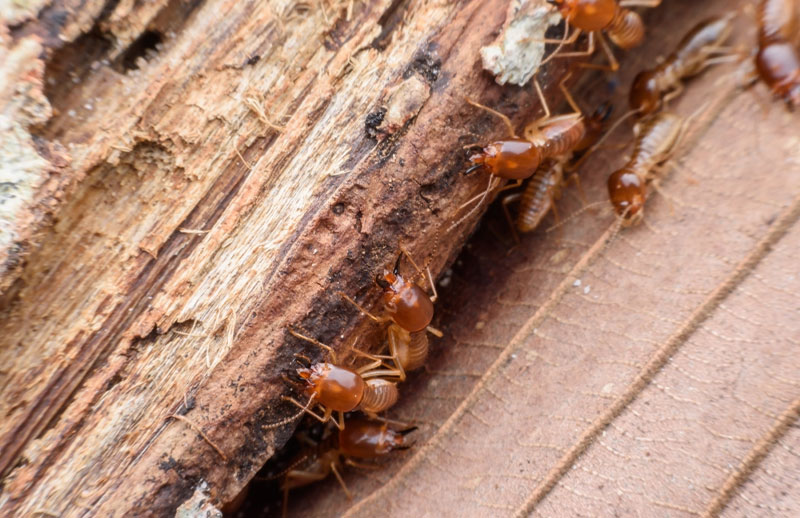
Termites don’t announce themselves. By the time most homeowners notice something is wrong, the colony has often been feeding quietly for months, sometimes years. In Metro Manila, where the heat, humidity, and heavy rains create ideal conditions, anay (the Filipino word for termites) are one of the most common and most expensive pest problems a property owner can face.
The good news is that termites leave clues. You just need to know what to look for. Here are seven signs that deserve your attention, and what to do if you find them.
1. Mud tubes on walls, foundations, or ceilings
Subterranean termites need moisture to survive, so they build thin tunnels of soil and saliva to travel between the ground and your property without drying out. These pencil-width mud tubes often show up along foundation walls, inside garages, behind cabinets, or climbing up concrete columns. If you break one open and see tiny pale insects inside, the problem is active.
2. Discarded wings near windows and doors
Mature colonies release winged termites, called swarmers, to start new colonies. They usually appear after rain, drawn to light. Once they land, they shed their wings. A small pile of translucent wings on a windowsill or near a light fixture usually means a colony is already established close by.
3. Wood that sounds hollow
Tap your door frames, baseboards, and wooden furniture with the handle of a screwdriver. Termites eat wood from the inside out, so the surface can look perfectly fine while the interior is nearly empty. A dull, papery sound is a red flag.
4. Tiny pellets that look like sawdust
Drywood termites don’t need contact with soil. They live entirely inside the wood they eat, and they push their droppings out through small kick-out holes. The result is a neat little pile of grainy, pellet-shaped frass under furniture, window frames, or roof timbers. If you keep sweeping up the same “dust” in the same spot, don’t ignore it.
5. Doors and windows that suddenly stick
Termite activity produces moisture, and that moisture can cause wood to swell and warp. If a door that closed fine last month now jams, or a window frame no longer sits flush, termites may be part of the reason. Humidity alone can cause this too, which is why an inspection matters. Guessing is expensive.
6. Bubbling, peeling, or rippled paint
Paint that bubbles or looks water damaged, with no leak you can find, can be a sign of termites working just beneath the surface. Many people repaint over it and move on. That hides the evidence while the damage keeps growing.
7. Floors that feel soft or sag
Laminate or wooden flooring that gives slightly underfoot, or sounds different when you walk across it, may be sitting on damaged subfloor or joists. This is usually a late stage sign, which means the infestation has had time to spread.
What to do if you spot any of these
First, resist the urge to spray. Over-the-counter insecticides kill the termites you can see, but they tend to scatter the colony and push it into other parts of the building. That makes professional treatment harder, not easier.
Second, take photos and leave the evidence as it is. Don’t sweep away the frass or knock down the mud tubes before an inspector has seen them.
Third, book an inspection. A proper termite inspection should tell you what species you are dealing with, how far the activity has spread, which areas are at risk, and what conditions around the property are inviting them in. That last part matters most. Treating termites without fixing the conditions that attracted them is why infestations come back.
How termite treatment actually works
There is no single fix that works for every property, which is why the inspection comes first. Depending on what we find, treatment may involve:
- Soil treatment to create a protective barrier around and beneath the structure, stopping subterranean termites before they reach the building.
- Baiting systems placed in strategic spots, which termites carry back to the colony.
- Direct wood application for infested or at-risk timber, reaching the termites already inside.
You can read more about how we handle this on our termite control and pest control services page.
How to lower your risk before termites find you
Fix leaking pipes, roof gutters, and air conditioner drips quickly, because moisture is the main attraction. Keep wooden fixtures and stored cardboard off bare floors and away from exterior walls. Avoid piling firewood, lumber, or old furniture against the house. And schedule a professional inspection at least once a year, especially if your property is older, near open land, or has a lot of timber in the structure.
If you’ve noticed even one of the signs above, it’s worth checking. Pestokil Solutions provides termite inspection and treatment for homes and businesses across Metro Manila. Request a quote and tell us what you’re seeing. We’ll start with the inspection, not the spray.